
Three-phase decanter centrifuge for palm oil mill processing in Indonesia
Source:
Author:
Hui Bo
Release time:
2026.11.18
Contents
- The clarification circuit in an Indonesian palm oil mill: where a three-phase centrifuge fits
- Three-phase decanter vs vertical clarifier plus sludge separator in Indonesian mills
- How dilution water volume and temperature decide what the decanter can recover
- Setting the interface on a horizontal decanter centrifuge without trial and error
- Where oil is lost in the clarification stage: sludge, water phase and solids
- Wear in a palm mill decanter: sand, fibre and kernel shell, and how the machine is protected
- Troubleshooting a three-phase decanter in palm oil service: symptoms, causes, actions
- Palm oil mills in Sumatra and Kalimantan, Indonesia: site conditions that shape decanter operation
- Sludge centrifuge for palm oil mill effluent: technical basis for POME oil recovery
- Huibo LWS three-phase decanter for palm oil clarification in Indonesia
- Related topics
- Frequently asked questions
A three-phase decanter centrifuge in an Indonesian palm oil mill earns its place at one narrow point in the process: the stretch between the screw press and the oil that goes to drying, where oil, water and fibrous sludge have to be pulled apart quickly and without leaving oil behind in the wrong stream. Mills across Indonesia run this stretch in two broad ways. Some keep the traditional vertical clarifier tank followed by a sludge separator; others put a three phase centrifuge on the diluted crude oil or on the clarifier underflow and let the machine do the splitting in one pass.
This article is written for the engineer who stands next to that machine at three in the morning. It follows the clarification circuit station by station, explains how the interface is set on a horizontal decanter centrifuge, shows where oil actually leaves the mill as loss, and ends with a symptom-to-cause troubleshooting table. The general theory of the scroll and bowl is already covered in the main decanter centrifuge guide for Indonesia, so it is not repeated here.
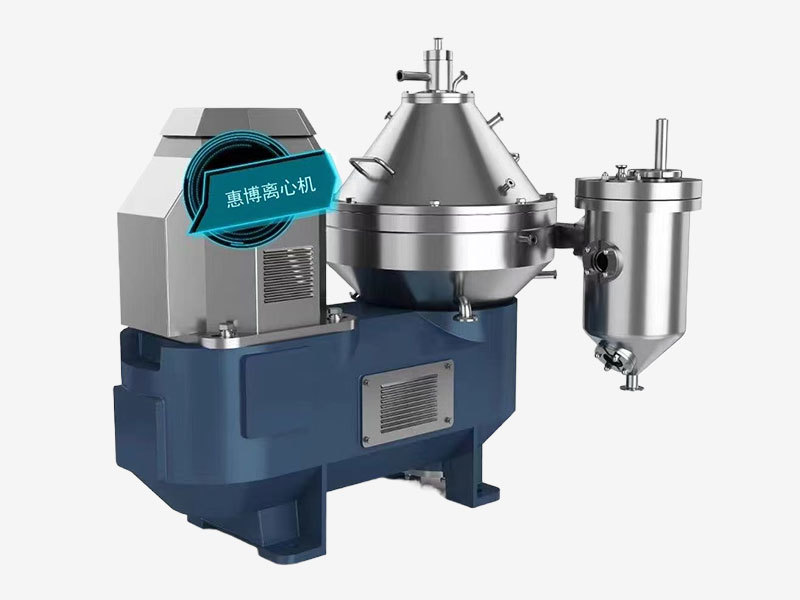
The clarification circuit in an Indonesian palm oil mill: where a three-phase centrifuge fits
Start from the press. Sterilised bunches are stripped, the fruit is digested, and the screw press delivers a mixture of crude oil, water, fibre fragments, nut debris and fine sand. That liquor is thick, sticky and too viscous to settle in any useful time, so hot water is added. Everything downstream is a conversation between three things: how much water was added, how hot it is, and how long the mixture is given to separate.
| Station | What happens | What can go wrong |
|---|---|---|
| Screw press outlet | Crude oil leaves with water, fibre, sand and non-oily solids | Press wear lets more fine fibre into the liquor |
| Dilution | Hot water thins the liquor so oil droplets can move | Too cold or too little water leaves the mixture viscous; too much floods the later stages |
| Vibrating screen | Coarse fibre and shell fragments are removed | Torn or blinded screen cloth passes fibre straight to the machine |
| Crude oil tank / vertical clarifier | Gravity settling: oil rises, sludge sinks | Short residence time sends oil into the sludge layer |
| Sludge separator or three-phase decanter | Recovers oil from sludge, or splits diluted crude oil directly into oil, water and solids | Interface drift, nozzle or weir blockage, wear |
| Oil purification and vacuum dryer | Removes remaining moisture and dirt before storage | Water carry-over from upstream overloads the dryer |
The three-phase decanter can be installed in two positions. In the first, it takes the underflow of the clarifier tank, which is the sludge phase still holding a worthwhile amount of oil, and does the work of the older sludge separator. In the second, it takes the screened and diluted crude oil directly, so the oil is split out before it spends a long time sitting in a hot tank. The second arrangement shortens the oil's time at temperature, which matters for oil quality, but it demands a steadier feed because there is no large settling tank to even out surges.
For the same machine principle applied to another oil stream, the biodiesel centrifuge article covers glycerin and wash-water separation after transesterification. Here the focus stays inside the mill gate.
Three-phase decanter vs vertical clarifier plus sludge separator in Indonesian mills
The conventional line, a continuous settling tank followed by a nozzle-type sludge separator, has run in Indonesian mills for decades and plenty of operators know it by heart. A three-phase decanter does not replace the idea of separation by density; it changes where the density separation happens and how forgiving the machine is to solids. The practical differences show up in the following comparison.
| Aspect | Vertical clarifier + sludge separator | Three-phase decanter (horizontal) |
|---|---|---|
| Separation mechanism | Gravity in a large tank, then high-speed disc stack on the sludge | Centrifugal sedimentation in a rotating bowl, solids conveyed out by the scroll |
| Tolerance to fibre and sand | Low at the separator; nozzles and discs foul and wear | Higher; solids are conveyed out continuously rather than retained |
| Residence time of hot oil | Long, in the tank | Short, seconds to minutes inside the bowl |
| Sensitivity to feed surges | Tank buffers surges | Needs a steady feed or a buffer tank ahead |
| Main adjustment | Skimming rate, nozzle selection, tank temperature | Interface position, differential speed, feed rate |
| Typical wear points | Nozzles, disc stack, bowl hood | Scroll flights and beach, feed zone, outlet parts |
| Operator skill | Tank watch-keeping, routine nozzle changes | Interface setting and torque reading |
Neither arrangement is automatically better. A mill with a well-run clarifier tank and clean, screened feed may see little advantage from changing. A mill that struggles with fibre in the sludge, or that sees sand wearing nozzles quickly, tends to find the horizontal decanter centrifuge an easier machine to live with. The disc-type machine remains relevant as a polishing step on cleaner streams; its internal design is explained in the disc separator page and is not the subject here.
How dilution water volume and temperature decide what the decanter can recover
Many separation complaints in palm mills, blamed on the machine, are really dilution complaints. Oil droplets need room and low viscosity to move. Add too little water and the liquor stays thick: droplets are held in place and part of the oil rides into the heavy phase. Add too much and the throughput of every downstream stage is pushed up, the oil becomes a smaller fraction of the total flow, and the machine works harder for the same recovered oil.
Temperature acts on viscosity in the same direction. Mills commonly hold the clarification stage at roughly 85 to 95 degrees Celsius. Below that range, viscosity rises and the density difference between oil and water narrows; well above it, heat damage to oil quality and flashing in tanks become concerns. A decanter fed at a lower temperature than the clarifier tank was designed for will show a drifting interface and oil in the water phase before anything mechanical has changed.
Typical Industry Reference Values for Palm Oil Clarification
These are reference values for orientation only. Each mill's press, fruit maturity and water supply changes them. The reliable method is to sample the feed, the oil outlet and the water outlet at a fixed interval, lab-test oil content and moisture, and move one variable at a time: temperature first, then dilution, then the machine settings. Changing three things together makes the next shift unable to tell what worked.
Water quality for dilution
Sites that draw dilution water from rivers or ponds face seasonal variation in suspended solids and hardness. Scale on heating coils reduces the actual temperature that reaches the diluted oil, even when the gauge on the tank reads correctly. If water-phase oil losses rise slowly across the month and then reset after coil cleaning, scale is the first suspect.
Setting the interface on a horizontal decanter centrifuge without trial and error
The interface is the boundary inside the bowl between the light liquid (oil) and the heavy liquid (water, with its dissolved and fine solids). Solids are flung to the bowl wall and carried out by the scroll, so the interface only concerns the two liquids. Its radial position is decided by the relative height of the two liquid outlets, and on most three-phase machines the heavy-phase outlet carries an adjustable element: a set of dam plates, a ring, or an impeller or guide disc whose diameter can be changed. The manufacturer's published product information describes guide discs as the means of adjusting the boundary on the LWS series.
The logic is simple even if the adjustment feels fiddly. If the interface sits too close to the axis, the heavy liquid is allowed to reach the oil outlet and water appears in the oil. If the interface sits too far out toward the wall, the oil layer thickens and oil can spill over the heavy-phase outlet, so oil shows in the water phase. A common field error is changing the adjuster by large steps, overshooting, and then chasing the problem back and forth.
A repeatable procedure
- Establish the density pair. Take a feed sample, let it separate in a heated glass cylinder, and note the clear oil depth and the water depth. The ratio gives a first idea of where the interface should sit.
- Start from a conservative adjuster position recommended for the bowl and feed, and run on a stable feed with the solids discharge working normally.
- Read both liquid outlets. Draw a sample from each at the same moment. A cloudy oil outlet with a clear water outlet means the interface is too close to the axis; oil visible in the water outlet means the opposite.
- Move the adjuster by one step and wait long enough for the pool to settle before sampling again. A few minutes is a minimum; the machine needs several bowl volumes of throughput to show the true effect.
- Log the final setting against feed temperature and dilution, so the next shift does not start from scratch when the fruit season changes.
The scroll differential speed and the feed rate also modify the liquid pool, but they behave like trimming tools rather than the primary lever. Adjust the interface first; then use differential speed to tune how dry and how oil-free the solids are.
Where oil is lost in the clarification stage: sludge, water phase and solids
Oil loss in a palm mill is not one number but a set of leaks. It is worth separating them because each has a different cure.
- Oil in the water phase. Usually emulsified or very fine droplets leaving through the heavy-phase outlet. Causes: cold feed, too much throughput, the interface too far out, or a stable emulsion from over-agitated dilution.
- Oil in the solids. Oil held in wet fibre and cell debris discharged from the beach. Causes: too high a liquid pool, a differential speed too high for the solids load, or oil that never had time to leave the sludge.
- Oil to the effluent system. Whatever leaves with the water phase ends up in the mill's effluent stream. This is why mills sample the water outlet regularly, not just the oil outlet.
- Oil in tank bottoms and pipes. Not a machine loss, but it appears in the mass balance. Cleaning of tanks that has not been scheduled turns into a sudden apparent loss.
A useful discipline is a three-point sample set taken on the same shift: feed, oil outlet and water outlet, plus a grab of discharged solids. Plot the results over a week, as many Indonesian mill laboratories already do for oil quality. A steady problem points to settings and design; an intermittent one points to feed variation, usually from fruit quality or press operation. The question of recovering oil from effluent streams is taken up further in the sludge section below, and in the FAQ.
Why a mass balance beats a single lab result
Spot results fluctuate. A single water-phase sample taken just after a solids discharge or during a feed surge can look alarming without meaning anything. Taking samples at regular intervals over several shifts and averaging gives the real picture, and it is the picture a process engineer needs before arguing for a machine change.
Wear in a palm mill decanter: sand, fibre and kernel shell, and how the machine is protected
The fastest-wearing region of a decanter in palm service is the part where the scroll pushes solids up the conical beach and out. The solids there are an abrasive mixture: fine sand picked up with the fruit, short fibre, and fragments of kernel shell that escaped the cracking and screening stages. In Indonesia the sand does most of the damage because it is hard and angular; fibre adds friction and wraps around parts.
| Component | Typical wear mechanism | Protection or response |
|---|---|---|
| Scroll flight edges (beach zone) | Sand abrasion; flight thickness reduces | Hard-facing or replaceable tungsten carbide tiles, inspected at set intervals |
| Solids discharge ports | Erosion enlarges the opening, solids carry more liquid | Replaceable port liners |
| Feed zone and distributor | Impact and erosion from sand-laden feed | Screened feed; wear sleeves |
| Heavy-phase outlet parts | Erosion by fine solids in the water phase | Check dimensions at each overhaul |
| Bowl internal surface | General abrasion, grooves along the wall | Periodic inspection; liners where fitted |
Protection starts well before the machine. A vibrating screen with sound cloth, a sand trap or hydrocyclone ahead of the feed tank, and regular cleaning of the crude oil tank to stop settled sand from being resuspended: each of these cuts the abrasive load more effectively than hard-facing can on its own. The machine's hard-facing then handles what remains.
A practical measurement is to record the vibration level and the torque trend after each overhaul. Wear that has begun to open the clearance between the scroll and the bowl shows up as rising torque at unchanged feed, and eventually as wetter solids and more oil in them. The general maintenance interval table in the first guide of this series applies; palm service should simply tighten the inspection of the beach zone.
Troubleshooting a three-phase decanter in palm oil service: symptoms, causes, actions
| Symptom | Likely causes | What to do |
|---|---|---|
| Oil in the water phase | Cold feed; overloaded flow; interface too far out; emulsified layer | Check feed temperature first, reduce flow, then move the interface adjuster one step; sample again |
| Water in the oil phase | Interface too close to the axis; insufficient settling time; dilution too high | Move the adjuster one step in the other direction; review dilution and flow |
| Thick emulsion layer between oil and water | Over-agitated dilution; sludge age; fruit quality changes | Review mixing intensity and how long sludge is held; raise feed temperature within the safe range |
| Oil in the discharged solids | Pool too deep; differential speed too high; short residence time | Adjust differential speed in small steps; reduce feed rate; check beach wear |
| Solids carrying over into the liquid outlets | Overloaded solids discharge; feed solids spike; worn scroll | Reduce feed; raise differential speed carefully; inspect scroll flights |
| High scroll torque, frequent trips | Solids packed in beach; sand load; differential speed too low | Flush; raise differential speed; check screening and sand removal |
| Rising vibration | Uneven build-up of dried solids; worn or damaged scroll; bearing condition; loose mounting | Stop and flush; inspect; do not run through repeated vibration alarms |
| Blocked liquid outlet | Fibre wrapped round outlet parts; poor screening | Clean outlet; fix screen cloth upstream |
| Slow drift of results across the shift | Feed temperature falling; dilution changing; fruit lot change | Log hourly; correct the upstream variable rather than re-setting the machine |
Start-up and shut-down habits that prevent half of these
Bring the machine to full speed on hot water before feed is introduced, and end every run by flushing with hot water until the outlets run clear. Oil that is left in the bowl cools and congeals, and a bowl that dries with sludge on its wall is the single most common source of the vibration alarm on the next start. This is also true in humid climates, where a machine idle over a night shutdown draws moisture into the gearbox if breathers are not kept in good order.
Palm oil mills in Sumatra and Kalimantan, Indonesia: site conditions that shape decanter operation
An Indonesian palm mill is rarely a neat laboratory. Many sit on plantation estates far from a major city, which means the spare scroll tile or the replacement bearing is not a quick purchase away. Maintenance planning in Riau, North Sumatra, Jambi and the Kalimantan provinces therefore leans toward conservative inspection intervals and a stocked set of wear items rather than reaction to alarms.
The climate adds its own pressures. Continuous humid heat keeps the mill hall warm, which helps hot-oil stages stay hot but is hard on electrical cabinets, drive motors and frequency drives. Cabinets need working filters and dry air; bearing grease needs a check against water ingress after heavy tropical rain, because rain-driven humidity and wash-down water find their way into poorly sealed housings. A decanter in an Indonesian mill benefits from a roofed and ventilated foundation area, not an open slab.
Fruit variation through the year
Fruit supply changes with the season and with harvesting practice. In wet months, fruit may be collected and transported in poorer condition, and different ripeness levels give an oil with different emulsifying tendencies. Operators in Sumatra and Kalimantan often describe a "bad fruit week" in which the interface keeps drifting and the water phase carries more oil than usual. The decanter did not change; the feed did. Keeping a simple record of fruit grade against separation results helps the process team decide whether to adjust the dilution or the interface, or simply to accept a temporary drop in recovery and keep the machine in a stable setting.
Power, steam and water availability
Mills in Indonesia typically generate steam and power from their own fibre and shell boilers. When boiler load fluctuates, steam pressure and hence feed temperature also fluctuate, and the decanter sees it as variable viscosity. A buffer tank with temperature control ahead of the machine takes the edge off these swings. Power quality is likewise sometimes uneven on remote sites; drives with proper protection and a controlled stop sequence keep the bowl from being stopped abruptly under load.
Whenever the same techniques are considered for sludge from a municipal or industrial wastewater plant, as opposed to palm oil sludge, the polymer conditioning and cake handling are different, and the sludge dewatering centrifuge article for Indonesia is the better reference.
Sludge centrifuge for palm oil mill effluent: technical basis for POME oil recovery
Palm oil mill effluent carries residual oil in a very dilute form, together with a large organic load. Whether a decanter is worthwhile on this stream is first a physical question: is there enough oil, in droplets large enough, in a feed stable enough, for centrifugal separation to produce a usable oil phase? The sludge centrifuge in a palm oil mill is normally applied to the clarifier underflow, which is richer in oil than final effluent, rather than to the treated pond water.
Two checks come before any further discussion. The first is oil content measured over several days at the point where the stream would be taken, not a single grab sample. The second is the state of the oil: free droplets separate readily, while oil tightly bound in an emulsion or in cell debris needs heat and sometimes demulsifying treatment. Where recovery is attempted, the recovered oil normally returns to the clarification circuit for polishing before storage, and the water and solids go onward through the mill's usual effluent route.
If the measurements show only a thin film of oil and a stable emulsion, no choice of machine will repair that; the effort belongs further upstream, in dilution, mixing and holding time. A mill that uses a decanter on the sludge stream should in any case expect to adjust the interface more often than on a cleaner feed, because the solids and the oil layer both change through the day.
Huibo LWS three-phase decanter for palm oil clarification in Indonesia
Huibo's LWS is a three-phase horizontal spiral-discharge sedimentation centrifuge, and palm oil processing is the first application named on its product page. It separates liquid-liquid-solid or liquid-solid-liquid feeds in one pass, provided the phases differ enough in density, which is the situation in a palm oil mill's diluted crude oil.
- Second liquid outlet. Oil, water and solids leave separately, so the sludge stream can go to oil recovery instead of being split in a second machine. The standard two-phase LW series has no such outlet.
- Guide disc and adjustable centripetal pump. They set where the boundary between oil and water sits, the adjustment a mill operator makes when the fruit batch or the dilution water changes.
- Continuous scroll discharge. Fibre fragments and sand leave from the cone end without stopping, which suits mills that run around the clock in the harvest peak.
- Related uses. The same series is named for fish meal with fish oil, biodiesel refining, and sludge treatment, so a site in Sumatra or Kalimantan that also processes a second stream can use one machine family.
To start, send the feed oil content, temperature and flow, and the technical team will review the configuration. Scroll-and-bowl basics are on the LW series product page.
Related topics
- LWS Three-Phase Decanter
- Disc Separator
- Biodiesel centrifuge for glycerin removal and purification in Indonesia
- Sludge dewatering centrifuge for wastewater treatment plants in Indonesia
Frequently asked questions
Recommend Dynamics
Share



Xiangtan Huibo Centrifuge Co., Ltd
Mobile phone: +86-18507323856 / +86-17726132761
Email: xiangtanhuibo@gmail.com
Address: Building B7, Accelerator Industrial Park, No. 18 Xiaguang East Road, High tech Zone, Xiangtan City, Hunan Province, China
Copyright © Xiangtan Huibo Centrifuge Co., Ltd. This site supports IPv4 IPv6.